
What would happen if CO₂ leaked into groundwater aquifers above a geological carbon storage site, and how could such leakage be detected early?
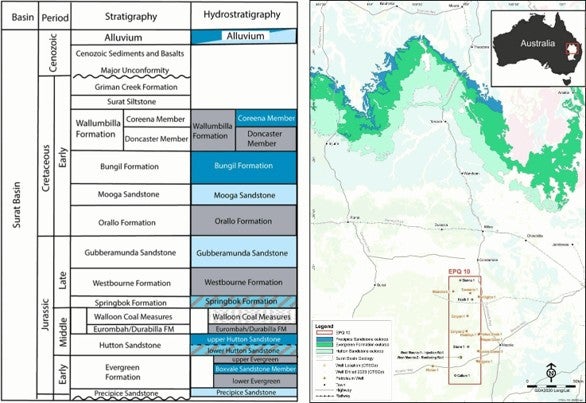
Carbon Capture and Storage (CCS) is expected to play an important role in reducing greenhouse gas emissions by permanently storing captured carbon dioxide in deep geological formations. While the risk of leakage from well-designed and managed storage sites is considered very low, understanding the potential consequences of any leakage remains critical.
Led by Julie Pearce and Misaki Matsui, this project investigated how groundwater aquifers might respond if carbon dioxide migrated from a CCS storage reservoir into overlying groundwater systems. Researchers examined both pure CO₂ and impure CO₂ streams to better understand the geochemical reactions that could occur and identify the water quality indicators most likely to provide early warning of leakage. The research focused on aquifer formations within Queensland's Surat Basin, including the Hutton Sandstone and Gubberamunda Sandstone.
Researchers conducted laboratory experiments using drill cuttings and groundwater under simulated subsurface conditions. By exposing aquifer rocks to carbonated water and impure CO₂ mixtures, researchers were able to assess how minerals reacted, how water chemistry changed and which elements or isotopes could act as indicators of CO₂ migration.
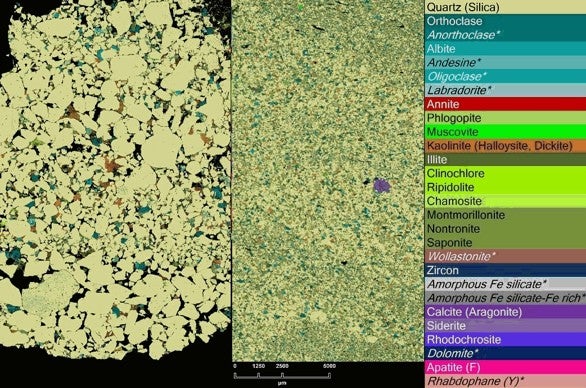
The study found that reactions between CO₂, groundwater and aquifer rocks were primarily controlled by mineral dissolution, particularly calcite. These reactions altered groundwater chemistry, increasing alkalinity and changing concentrations of dissolved elements including calcium, strontium and other trace metals. The findings demonstrated that different aquifer formations may respond differently depending on their mineral composition. Importantly, the research identified a suite of potential monitoring indicators that could help detect and track CO₂ migration. Changes in strontium isotopes (⁸⁷Sr/⁸⁶Sr), δ¹³C dissolved inorganic carbon, bicarbonate alkalinity, and certain dissolved elements were found to be particularly promising tracers for identifying geochemical changes associated with CO₂ intrusion. The study also examined the influence of impurities within captured CO₂ streams. Results showed that some dissolved metals were sensitive to the presence of impurities such as oxygen, highlighting the importance of understanding how different CO₂ stream compositions may affect groundwater monitoring outcomes and risk assessments.
PROJECT OUTPUTS
- Final project report: Impure CO2 reactivity in aquifers overlying CO2 storage sites (2026)
|